
I’ve been reflecting on what I read in the past year, and I want to spend a little more time talking about my favourite reads of the year and collecting those thoughts in one place. There will also be a few repeats as I did a post midway through the year with my favourite reads of the year so far, and some of these books have separate full reviews where I talk about my thoughts in a lot more detail than I will here.
This list will be in no particular order, just vaguely chronological, so let’s begin!
Nettle and Bone by T. Kingfisher
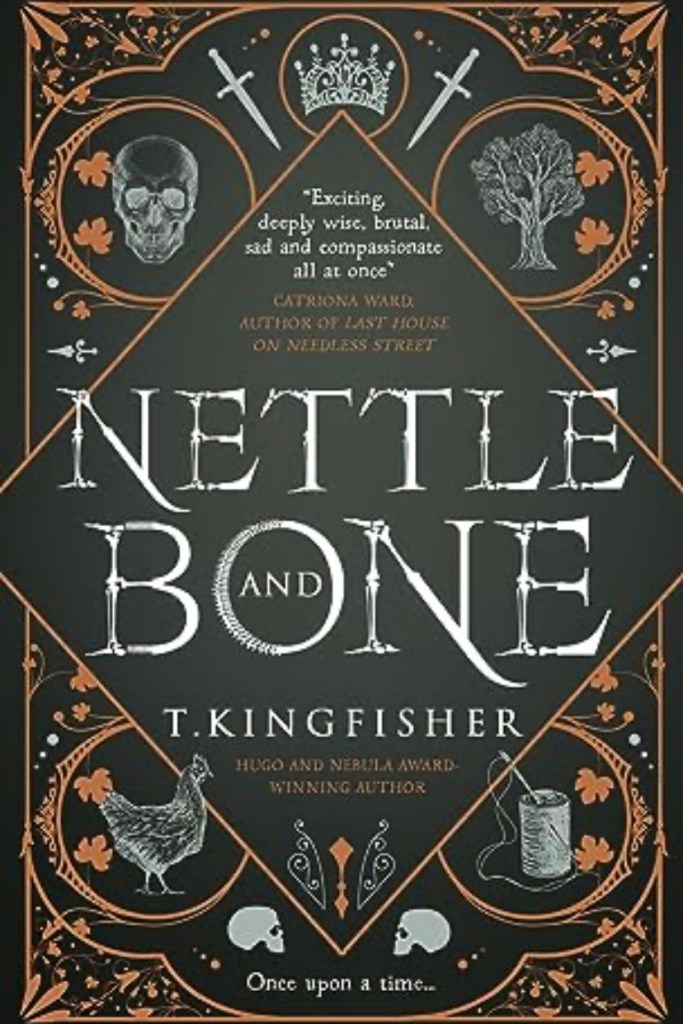
As the shy, convent-raised, third-born daughter, Marra escaped the traditional fate of princesses, to be married away for the sake of an uncaring throne. But her sister wasn’t so fortunate—and after years of silence, Marra finally realized that no one was coming to their rescue. No one, except for Marra herself. On her quest, Marra is joined by the grave witch, a reluctant fairy godmother, a strapping former knight, and a chicken possessed by a demon. Together, the five of them intend to be the hand that closes around the prince’s throat and frees Marra’s family and their kingdom from its tyrannous ruler at last.
There are so many elements here that make me feel like the book was written for me specifically, including this being a quest fantasy with a found family element, and also being fairytale-esque. It plays with fairytales in a way where we have the comfort and cosiness of the story with a dark thread running throughout it. I think that tonal dissonance might be off-putting for some readers, but I think the darkness is well-woven with the cosiness, and I greatly enjoyed reading it. It’s one of my favourite ways to see fairytales explored. It’s also not a retelling in any way that I can tell, just heavy on the fairytale vibes. The imagery and the setting were immaculately described, and the tone in places was almost blunt and very to the point which was quite refreshing. This is my first T. Kingfisher read, and I am already deeply in love with her fantasy work and how unique the worlds are.
A Study in Drowning by Ava Reid
Effy is studying architecture, but her true passion lies in literature, and one book in particular: Angharad is a piece of folklore literature that is considered a modern-day classic in this world. It is the one piece of media that Effy feels entirely seen by. The author of Angharad passed away a few months before the start of this book, and Effy receives a mysterious letter inviting her to help redesign the late author’s manor after she won a contest. Obviously, she has to go. This guy is her favourite author, and this is her favourite book. But when she gets there, she discovers that the manor is crumbling into the sea. It is not fit to be restored by a first-year architecture student, and there’s another kid there named Preston from the literature college who is intent on proving that Angharad is not written by the person that we think it is.

I think that the character of Effy is resonating with a lot of people. She’s like other Ava Reid characters I’ve read in the sense that she’s an outsider to society and within her own life. She’s not like other Young Adult protagonists, and I don’t mean that in a derogatory ‘not like other girls’ way, but she’s not snarky, she’s not witty, I wouldn’t call her very strong or necessarily very brave, but I would call her a survivor. The strong writing style and these characterizations are what contribute to what I think is the strongest part of this book, which is the thematic elements of it. It is impressive how much Ava Reid was able to cover thematically with a relatively short book. This is a book about how men take advantage of women, how particularly academic systems will not change unless pushed and forced to change, and how people will endure difficult situations even if they get worse over time because it’s all that they know and they don’t see a way out. It is often a dark book, but I think it’s a very rewarding one.
Don’t Let the Forest In by C.G. Drews
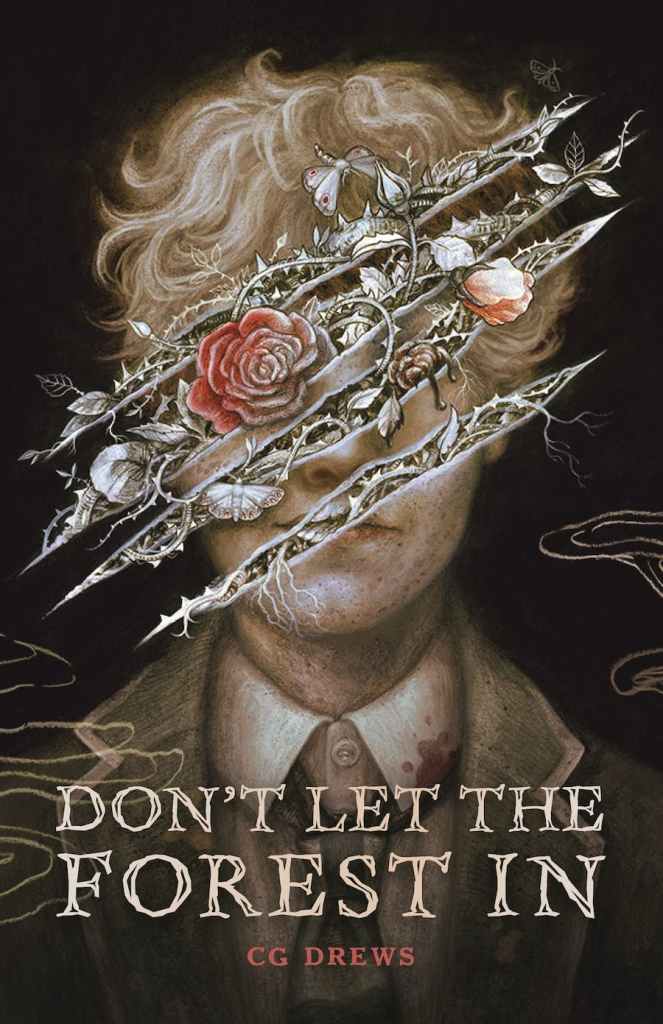
High school senior Andrew finds refuge in the twisted fairytales that he writes for the only person who can ground him to reality – Thomas, his best friend who turns his stories into whimsically macabre art. And, with his twin sister, Dove, inexplicably keeping him at a cold distance upon their return to boarding school, Andrew finds himself leaning on his friend even more. But something strange is going on with Thomas. His abusive parents have mysteriously vanished, and he arrives at school with blood on his sleeve. Thomas is haunted by something. Desperate to figure out what’s wrong with his friend, Andrew follows Thomas into the off-limits forest one night and catches him fighting a nightmarish monster—Thomas’s drawings have come to life and are killing anyone close to him. To make sure no one else dies, the boys battle the monsters every night. But as their obsession with each other grows stronger, so do the monsters, and Andrew begins to fear that the only way to stop the creatures might be to destroy their creator.
Drews has a gorgeous writing style. The prose is beautiful (which I already knew as an avid lover of their other works) and I’d absolutely be willing to try another book by this author with these horror influences just because of that. This book is hugely atmospheric and dreamlike (or nightmarish?) with hauntingly beautiful imagery that I have taken infinite screenshots of so I can read my favourite lines over and over again. The spectrum of representation in this story is refreshing and touches on themes of identity, mental health, and disordered eating. These are not easy topics to discuss with equal parts honesty and sensitivity, but they are important to talk about, especially for the young adult target audience.
Icarus by K. Ancrum
Icarus Gallagher is a thief. He steals priceless art and replaces it with his father’s impeccable forgeries. For years, the wealthy Mr. Black has been their target, revenge for his role in the death of Icarus’s mother. To keep their secret, Icarus adheres to his own strict rules to keep people, and feelings, at bay: Don’t let anyone close. Don’t let anyone touch you. And, above all, don’t get caught. Until one night, he does. Not by Mr. Black, but by his mysterious son, Helios, now living under house arrest in the Black mansion. Instead of turning Icarus in, Helios bargains for a friendship that breaks every single one of Icarus’s rules. As reluctance and distrust become closeness and something more, they uncover the bars of the gilded cage that has trapped both of their families for years. Icarus is determined to escape, but his father’s thirst for revenge shows no sign of fading, and soon it may force Icarus to choose: the escape he’s dreamed of, or the boy he’s come to love.

Ultimately, Icarus is a book about opening yourself up to weakness and vulnerability. There are so many books written about the weak learning to be strong, and less so about how hardening yourself to survive has a cost, and the bravery of beginning to remove that protection and allowing yourself to grow. But this one is a love letter to the value of emotional intimacy and human connection, as all Ancrum books are, and it never gets less heart-wrenching to read about.
Starling House by Alix E. Harrow

Nobody in Eden, a small town in Kentucky, remembers when Starling House was built, but the town agrees it’s best to let the ill-omened mansion and its last lonely heir go to hell. Opal knows better than to mess with haunted houses or brooding men, but when an opportunity to work there arises, the money might get her brother out of Eden, and the stories of the house’s bad luck which have been passed down for generations are too much to resist. But Opal isn’t the only one interested in the horrors and the wonders that lie beneath Starling House, and she realises that if she wants a home, she’ll have to fight for it, even if it involves digging up her family’s ugly past to go down, deep down beneath her house, and claw her way back to the light.
On the surface, this is a book about a haunted house that is trying to call a girl home, and the lonely boy trapped inside longing for an escape. But, beneath that, it’s about the power of dreams to haunted people, the horrors of generational poverty, and how family bonds can both imprison and liberate. Starling House feels like a reckoning as much as a journey towards healing, and I don’t think that I will ever stop swooning about it. This book is a sweeping gothic fairytale for fans of atmospheric fantasy set against a backdrop of mystery and suspense. I loved how festeringly dark and whimsical this story felt, almost like a fairytale retelling, whilst seamlessly blending with the contemporary ‘our world’ setting. The story is haunting, staying just shy of full-blown horror, and the moody tone truly enhances the reading experience. It was almost like a story suspended in time.
Compound Fracture by Andrew Joseph White
Compound Fracture is a book about a teenager who survived an attempted murder with the help of an ancestor who died in the West Virginia coal wars, only to get drawn into a struggle between the rural poor and those who exploit them. It is the story of a century-long blood feud and how people are moved to violence when facing extreme hopelessness in working class Appalachia, told through a trans and autistic viewpoint. This book reads so clearly as a love letter to the region and the working class and not wanting to leave your hometown, even if it almost kills you because it’s still yours. The author masterfully weaves in the perspective of both the oppressed and the oppressors in this town, and the reader soon realises that desperate times and desperate measures mean that the lines are often blurry between the two.
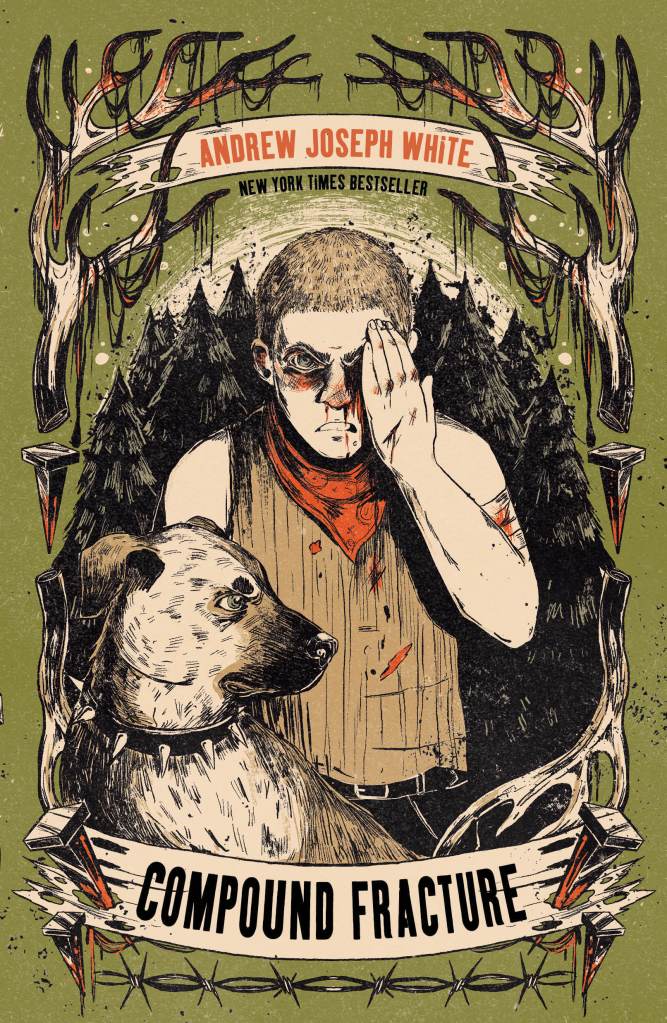
One of my favourite small parts of this book is how the author presents a main character with parents who don’t understand them, but they’re trying. They don’t understand their son’s desire to transition, and they misgender and deadname him constantly, but the moment his safety is threatened, they’ll support him no matter the cost. Additionally, I did enjoy Miles’ journey to autism acceptance, and how signs of his parents having similar undiagnosed traits were continually shown. This was one thing they really did understand and accept about Miles unconditionally. The autism representation was very well done and oddly reminiscent of my own experience, to the point where it felt like I was reading about myself during some scenes.
My Throat An Open Grave by Tori Bovalino

In the small town of Winston, Pennsylvania, they fear the Lord of the Wood almost as much as they fear God. According to the legend, ghosts of the forest steal unwanted babies, leaving wood and bone in their place. Leah thinks the legend is just a way to scare the local kids until her baby brother disappears and the weight of the town’s judgment forces her to cross into the Lord of the Wood’s domain to bring him back. But the Lord isn’t what she expects. He tells her she can have her brother back for a price. Their bargain uncovers secrets Winston has tried to keep buried for decades, and what Leah unearths has her questioning everything she has been taught to fear.
This little book has had a notably big impact on my life. It’s so much more than just a spooky read: it’s full of redemption and learning to accept yourself and discovering that maybe you don’t have to constantly adapt to your current life. I’m always very interested in folklore-influenced books featuring religious towns and archaic views of women, mostly because it’s not something I’ve grown up around, and it usually results in me supporting women’s wrongs and female rage. This book did a wonderful job at showcasing how the women in this town are the ones who face the consequences of men’s actions, and the emotional change it takes to resist what you’ve been taught and enact your own beliefs. How the author weaves in these journeys of self-discovery throughout dark moments and lighting the way with hope is what I love most about the book.
Our Hideous Progeny by C.E. McGill
The 1850s is a time of discovery, and London is ablaze with the latest scientific theories and debates, especially when a spectacular new exhibition of dinosaur sculptures opens at the Crystal Palace. Mary, the great-niece of Victor Frankenstein with a sharp mind and a sharper tongue, is keen to make her name in this world of science alongside her geologist husband Henry, but without wealth and connections, their options are limited. When Mary discovers some old family papers that allude to the shocking truth behind her great-uncle’s past, she thinks she may have found the key to securing their future. Their quest takes them to the wilds of Scotland, to Henry’s intriguing but reclusive sister Maisie, and to a deadly chase with a rival who is out to steal their secret.
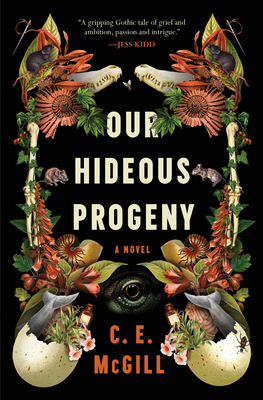
Something I love about this book is that the author made the world as real as possible. Many of the characters, while still fictional, are heavily inspired by real historical figures, as are life-sized dinosaur statues in Crystal Palace that were created to illustrate palaeontological models. The books Mary reads, the theories she discusses, and the people she meets are all true to life—including the women who attend the scientific society meetings, all of whom are scientists in their own right. Mary herself is named after three real-life Marys: Mary Shelley, fossil hunter and self-taught palaeontologist Mary Anning, and the so-called nineteenth century ‘Queen of Science’ Mary Somerville, whose contemporary biographies emphasise how she was the ideal Victorian woman (humble, pleasant, soft-spoken, devoted to her husband, etc). I like how the author’s Mary shows the experience of a woman who is the opposite of Somerville. If it was difficult for her to make a name for herself, how impossible would it have been for all the women who couldn’t bring themselves to make light of the obstacles, grin, and bear it? Women who were hot-tempered and prideful—women who posed a threat?
The Wild Huntress by Emily Lloyd-Jones
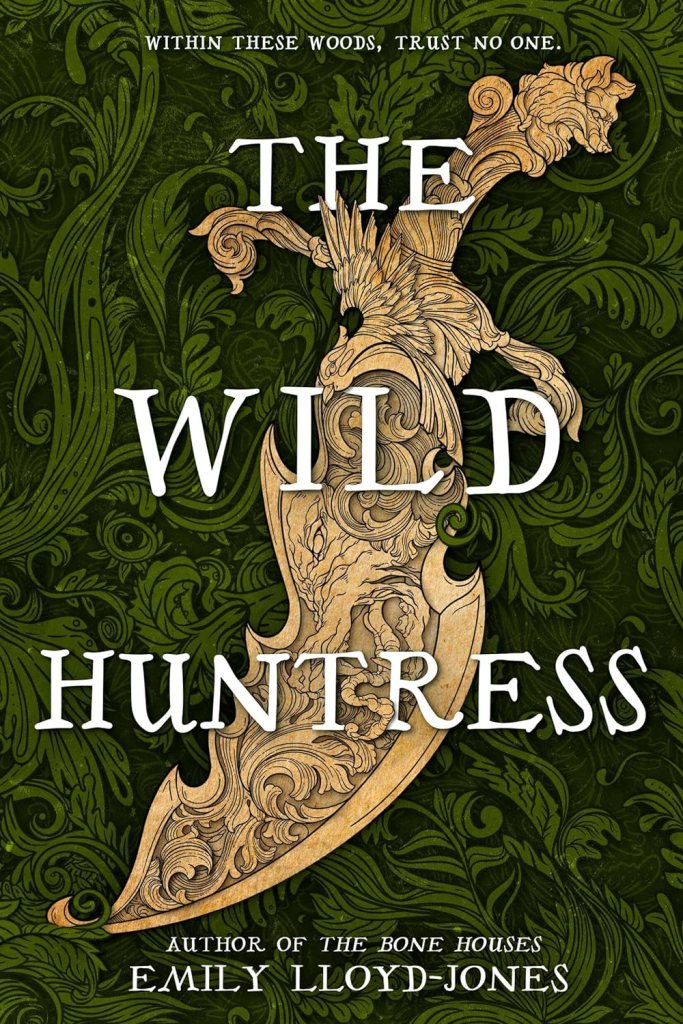
Every five years, two kingdoms take part in a Wild Hunt. A monster-hunting girl teams up with a prince and a trickster to win the dangerous tournament known as the Wild Hunt. Branwen’s desperate to cure her mother’s sickness, and the Wild Hunt is her only option. Gwydion is the least impressive of his magically talented family, but he’ll do whatever it takes to stop his cruel older brother from becoming a tyrant. Pryderi is prince-born and monster-raised, and he knows deep down that the royal crown doesn’t interest him—all he wants is to know where he belongs. But unbeknownst to the trio, the Hunt is far more dangerous to win than to lose.
Our female main character is Branwen—a huntress of monsters, caretaker of her mother, and owner of a cat who is definitely not deadly. She has no magic of her own, but she possesses a unique power: she can see magic. No monster or enchantment can trick her, a valuable skill for joining the hunt, although it had less impact on the plot than I expected. I loved how the Hunt forced her (and the other main characters) to confront what she knew of herself and her hope for the future, even as she was fighting for her life and her freedom. In my opinion, Branwen was the character with the most to lose on a personal level, and her motivations were the most relatable, so I was invested in seeing her win.
A Dark and Drowning Tide by Allison Saft
Lorelei, a folklorist with a quick temper and quicker wit, is on an expedition with six eccentric nobles in search of a magical spring which promises untold power and may reunite their politically fractured kingdom. She’s determined to prove herself and make her dream of becoming a naturalist and being able to travel the lands freely come true. However, the expedition goes awry when its leader—Lorelei’s beloved mentor—is murdered on the first night aboard their ship, and the only person Lorelei suspects must be innocent is Sylvia, her longtime academic rival. They must find the spring before the murderer strikes again, but other dangers lurk in the forests that rearrange themselves at night, rivers with dragons sleeping beneath the water, and shapeshifting beasts out for blood. As Lorelei and Sylvia grudgingly work together to uncover the truth—and resist their growing feelings for one another—they discover that their professor had secrets of her own. Secrets that make Lorelei question whether justice is worth pursuing, or if this kingdom is worth saving at all.
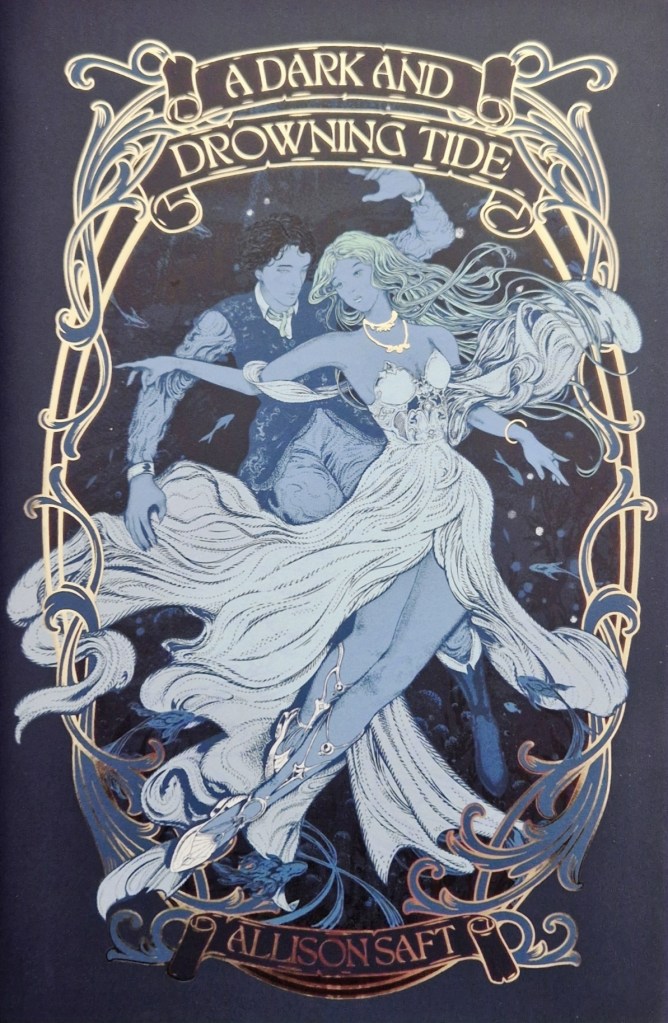
I think that Lorelei is an excellent main character. She’s not very likeable at all, and definitely not easy to cheer for as a narrator, but that’s what endeared her to me. I found her to have an incredibly refreshing voice. She holds a lot of bitterness within her, and it comes from an interesting place: she is this world’s equivalent of being Jewish, and she’s had to build herself a prickly exterior to protect herself from being looked down upon and mistrusted because of that. I like that we got to see Lorelei’s struggles with being in this world and how the antisemitism she’s subjected to throughout her life changed her as a person, and especially her attachment to her mentor who provides a reprieve from the discrimination. I really felt her perspective and could feel this granular pettiness that she has that is sometimes justified and sometimes not. I like that she has an arc where she changes as a character, she doesn’t lose her prickliness or necessarily become nicer, but she does become better.
So those are my favourite reads of the year, narrowed down into a top ten list. If you’ve read any of these and have opinions, or if you want to gush about your own favourite reads, let me know in the comments below.

 TandeWrites
Leave a comment